The full story
I’ve been building on the open web for close to two decades — as a developer, agency owner, community organizer, startup founder, and ecosystem builder. The through-line in all of it is a genuine love for what WordPress and open source make possible, and for the people who show up to make it better.
I’m based in Israel, I’m a mother of seven, and I believe the open web is worth defending.
How I got here
I studied English literature, which sounds like it has nothing to do with what I do today — but after graduating I started providing English language services: copywriting, marketing writing, Hebrew-to-English translation. All of that content was going into websites, and the websites turned out to be far more interesting to me than the content I was creating. I had to learn more about the web, and that’s when I stumbled into the open source world of website building.
I came across WordPress, Drupal, and Joomla and started looking into all of them. WordPress was something else entirely. The theming, the plugins, the constant innovation — I was like, this is amazing. I started offering WordPress services when it was still seen as just a blogging platform. Nobody thought it could power serious business sites. But I was well positioned when people started coming around to it, and that’s how I started generating leads and building a real business.
I founded illuminea, my WordPress agency, around the time my fifth child was born — I know because she’s now 19, and that’s how I mark the milestone. I learned early on the importance of saying no to things that would stretch you too thin. I ran the agency for the next 13 years, building WordPress sites for clients across industries while raising a family, and learning more in those years than in any course or conference I’ve attended.
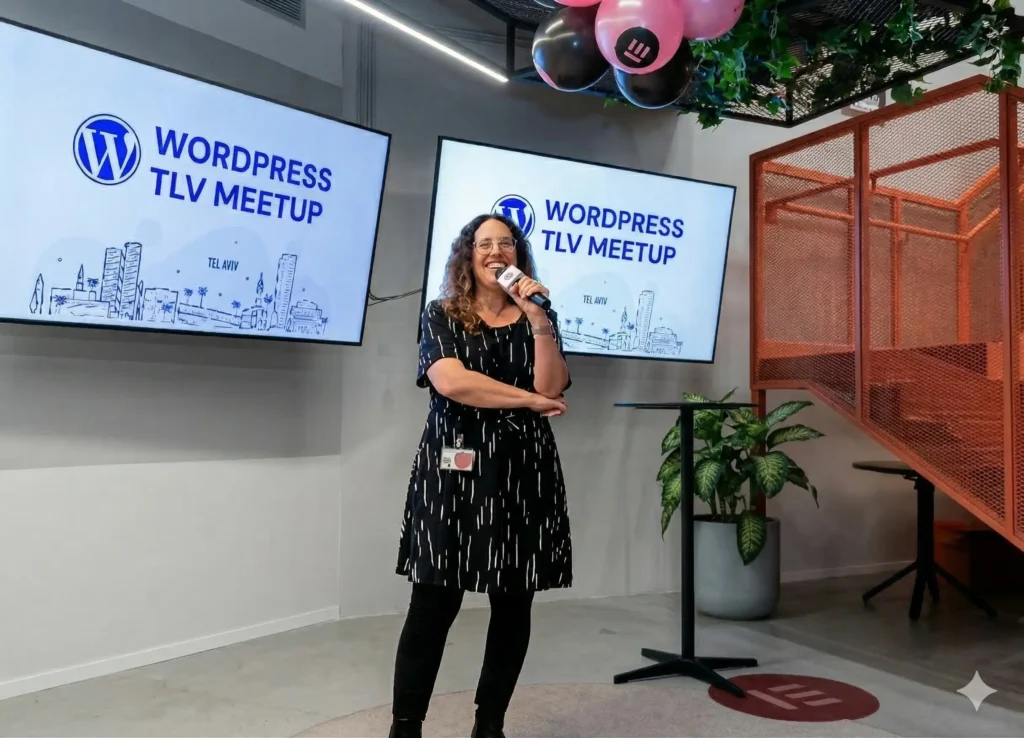
In my spare time (as you do), I organized five WordCamps in Israel — three in Jerusalem, two in Tel Aviv. The first one I organized in Jerusalem, I invited Matt Mullenweg and he actually came, which was incredible. At a few of those events, the Elementor founders — back when they were called POJO — sponsored a table. Literally three of them, a folding table, some stickers and flyers. That’s where I first got to know them.
Thirteen years into running the agency, I got the idea for Strattic. The inspiration came from a blog post by Matthias Billmann, co-founder of Netlify, who had taken a WordPress site, scraped it, and published a static version. It was clunky, but the concept was everything: what if you could get the performance and security of a static site without abandoning WordPress? Static sites are faster, don’t have server load issues, and because you leave the plugins behind, most security vulnerabilities go with them. I felt more passionate about this idea than anything else I’d ever wanted to build.
We started noticing that more and more of our customers — enterprise companies with complex, high-end sites — were using Elementor. That surprised us. We reached out to the Elementor team to collaborate on compatibility, and somewhere in that process they said: we think we want to acquire you. That was completely unexpected. But the alignment was real, and it was the kind of outcome that lets you keep going deeper into the work you actually care about.
After the acquisition, I joined Elementor as Head of Strattic, continuing to lead the product we’d built while integrating it into Elementor’s ecosystem. Over time the role evolved, and Elementor offered me a new position that drew on everything I’d been doing in the WordPress community for years.
My focus is Elementor’s relationship and responsibility toward the WordPress ecosystem. That means managing our Five for the Future open source contributions, sponsoring WordCamps and events around the world — something like 30 events a year — building relationships with other WordPress products, and helping position Elementor and our AI product Angie for the next era of WordPress. I’ve been part of this ecosystem for two decades and I plan to keep showing up for it.